
← 返回游戏目录
Poland has been in NATO for seven months. Article 5 says an attack on one is an attack on all, and nobody has ever had to invoke it. Everything but the flag still comes from the old alliance: the equipment, the procedures, the habits of command.
You are a Polish officer, and your unit is on an exercise near the eastern border. NATO observers have come to certify it. The campaign follows that autumn day by day. Each day ends with your report, and what you did and what you wrote carries into the next. In Moscow, not everyone is pleased about any of it.
This is a blind RTS. You sit in a command post, and your units are out in the field, kilometres away and out of sight. Their reports come over the radio net, and your radio operator writes them down: who called, when, where, and what they saw. What to do about it is your call.
You give your orders on the map: drag a call sign to where it should go, pick the order, and it is written onto your pad. Time it to the minute or hold it until first contact, then hand the page to your operator, who sends it one station at a time. Urgent traffic jumps the queue. Not every call is answered. And the clock keeps running.
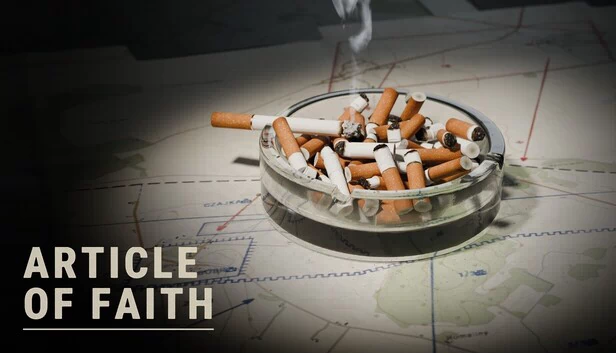
The map on your table is a real 1:25,000 sheet. You plot the situation on it yourself, in crayon: your positions, the other side, lines and arrows, the time of every sighting. A grid reference on a report takes you straight to the spot. A ruler, a protractor and a range template help you work out distances and what each position can see and reach across the real terrain. The situation in the field does not wait for you, and keeping your map close to the truth is your job. On easier settings, your staff plots your units' reported positions for you. On the hardest, nobody does.
Out there, kilometres from your table, the battle is real. Every platoon, every vehicle and every enemy patrol on that sheet is simulated in real time. They move across the actual terrain and see only what the ground, the light and the weather let them see. They open fire, take losses, break contact and dismount on their own when no order comes. The other side fights the same way, from its own half-blind picture of the battle. Nothing your platoons report is staged for you: a report is what your men actually saw, sent when they had the time and the nerve. The battle goes on whether you are looking at the map or not.
Almost half of its professional soldiers were officers, two-thirds of them majors or above, and its first field manual written to NATO standards was still seven years away. The radios, the forms and the way a staff works are built from Soviet sources. The country is real. What this autumn brings is not.
GAME PROFILE
Article of FaithArticle of Faith
Autumn 1999 Poland has been in NATO for seven months. Article 5 says an attack on one is an attack on all, and nobody has ever had to invoke it. Everything but the flag still comes from the old alliance: the equipment, the procedures, the habits of command. You are a Polish officer, and your unit is on an exercise near…
Autumn 1999
Poland has been in NATO for seven months. Article 5 says an attack on one is an attack on all, and nobody has ever had to invoke it. Everything but the flag still comes from the old alliance: the equipment, the procedures, the habits of command.
You are a Polish officer, and your unit is on an exercise near the eastern border. NATO observers have come to certify it. The campaign follows that autumn day by day. Each day ends with your report, and what you did and what you wrote carries into the next. In Moscow, not everyone is pleased about any of it.
How you command
This is a blind RTS. You sit in a command post, and your units are out in the field, kilometres away and out of sight. Their reports come over the radio net, and your radio operator writes them down: who called, when, where, and what they saw. What to do about it is your call.
You give your orders on the map: drag a call sign to where it should go, pick the order, and it is written onto your pad. Time it to the minute or hold it until first contact, then hand the page to your operator, who sends it one station at a time. Urgent traffic jumps the queue. Not every call is answered. And the clock keeps running.
You draw the picture
The map on your table is a real 1:25,000 sheet. You plot the situation on it yourself, in crayon: your positions, the other side, lines and arrows, the time of every sighting. A grid reference on a report takes you straight to the spot. A ruler, a protractor and a range template help you work out distances and what each position can see and reach across the real terrain. The situation in the field does not wait for you, and keeping your map close to the truth is your job. On easier settings, your staff plots your units' reported positions for you. On the hardest, nobody does.
The battle you cannot see
Out there, kilometres from your table, the battle is real. Every platoon, every vehicle and every enemy patrol on that sheet is simulated in real time. They move across the actual terrain and see only what the ground, the light and the weather let them see. They open fire, take losses, break contact and dismount on their own when no order comes. The other side fights the same way, from its own half-blind picture of the battle. Nothing your platoons report is staged for you: a report is what your men actually saw, sent when they had the time and the nerve. The battle goes on whether you are looking at the map or not.
The Polish Army as it was in 1999
Almost half of its professional soldiers were officers, two-thirds of them majors or above, and its first field manual written to NATO standards was still seven years away. The radios, the forms and the way a staff works are built from Soviet sources. The country is real. What this autumn brings is not.
2027Windows测试版本
CHEATS
游戏修改项
当前没有可用修改项
您仍可浏览游戏资料;如后续支持修改器,修改项会显示在这里。
DISCOVER MORE



评论