The scale settles. Perfectly still.
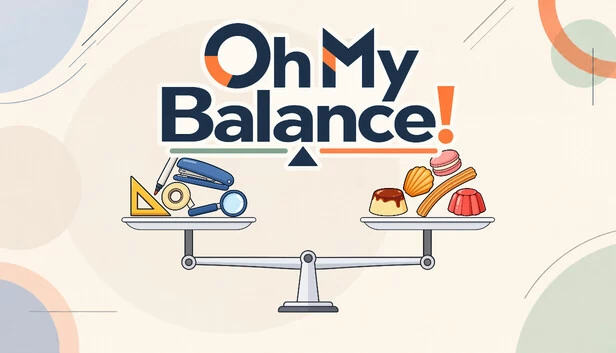
Stack things on the right pan until they weigh the same as what is already on the left.
That is the whole rule.
■ You are never shown a number
This game will not tell you how many grams anything weighs.
Is an eraser heavier than a paper clip? How many pencils does it take to match one apple?
The only clue you get is the way the scale tips when you put something on it.
Play for a while and a feeling starts to grow in you: "about this much, probably."
You will not need notes. You could not write them anyway.
■ The closer you get, the more stars
Balance the scale and the stage is cleared. The closer you get, the more stars you earn.
Still a little light. So what goes on next? One clip is not enough; the eraser overshoots.
Hunting for the one piece that closes that last gap is where this game is at its best.
■ Your hands are tested too
What you put down rolls, and it falls.
Round things roll off. Long thin things topple. Stack them in the wrong order and the pile
you built so carefully slides off the pan.
Right-click to turn a piece, pick your spot, and let go gently.
Knowing the answer is not enough if you cannot build it.
■ Some pans do not play along
Narrow pans. Tilted pans. Pans that drift slowly left and right. Pans split in two.
Wet, slippery pans. Pans whose tilt rocks back and forth.
Every trick is visible the moment the stage opens. Nothing here is unfair.
But the way you usually stack will not work.
■ Nothing rushes you
There is no time limit. Retry as often as you like.
Stationery, sweets, bread, vegetables, fruit, kitchenware, toys, tools, birds, fish:
each chapter brings a new set of things to look at, one stage at a time.


评论